
Probability I
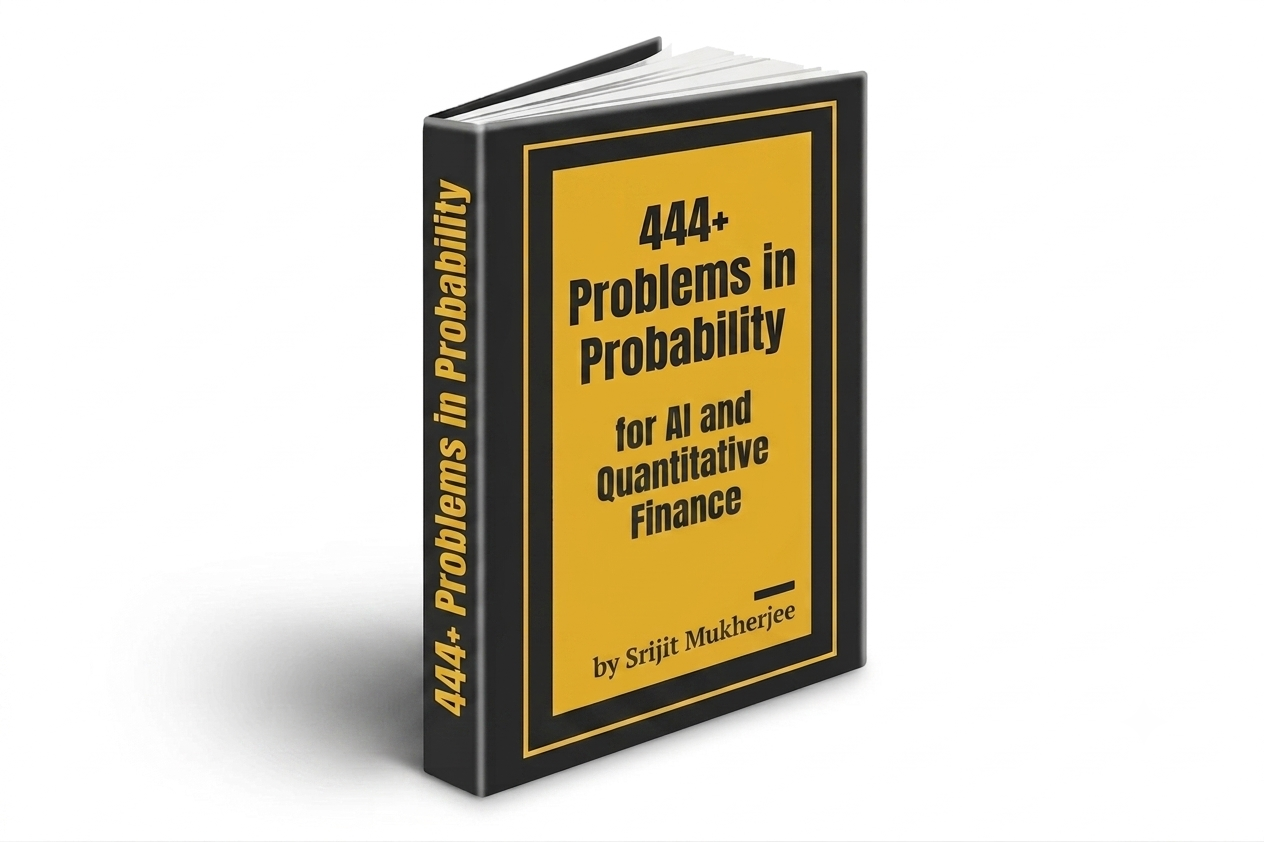
Your Learning Resources
- Hossein (Level 1): Introduction to Probability, Statistics, and Random Processes by Hossein Pishro-Nik (ProbabilityCourse.com)
- Hossein Video (Level 1): Video Course
- Tsitsiklis (Level 1): Introduction to Probability by Dimitri P. Bertsekas and John N. Tsitsiklis
- Tsitsiklis Video (Level 1): Video Course, Youtube with Tutorials
- Prabha Video (Level 1): Probability Theory and Applications, IIT Kanpur, Prof. Prabha Sharma
- Ross (Level 2): A First Course in Probability by Sheldon M. Ross
- Blitzstein (Level 2): Introduction to Probability by Jessica Hwang and Joseph K. Blitzstein,
- Blitzstein Video (Level 2): Video Course
Your Preparation Strategy
Preparation in this course depends strongly on your current mathematical maturity, and students are therefore grouped into three broad levels to ensure the right balance between conceptual learning and problem solving.
Level 0 students, who are not yet proficient in high school mathematics, must first focus entirely on rebuilding foundational tools such as algebra, combinatorics, and basic set theory before engaging seriously with probability. For them, the priority is strengthening school-level mathematical reasoning and slowly transitioning into classical probability ideas through counting, with heavy reliance on examples and guided understanding. At this stage, problem solving is minimal, and the goal is simply to become comfortable with the language of mathematics used in the course. They should first focus on using their high school mathematics books to sharpen their skills.
Level 1 students, who are also not yet proficient in high school mathematics but are ready to begin this structured probability learning, should focus primarily on building conceptual understanding (around 80%) while keeping a small but consistent portion of effort (around 20%) for solving easy to medium problems. Note that the books are also divided into two different Levels. Their preparation should follow a strict cycle: first engaging with videos and reading materials, then attempting the book problems, and whenever they get stuck, returning to examples in the reading materials and theory until understanding stabilizes. The emphasis is not speed but repetition and exposure—learning how standard probability tools like conditional probability, basic distributions, and combinatorics naturally emerge from repeated practice. Progress is measured by the ability to independently solve all Level 1 problems before advancing. Level 1 problem sets must be solved and should be used as a measure of progress.
Level 2 students, who are already proficient in Level 1 probability, should shift their focus almost entirely toward problem solving (around 80%) with minimal conceptual revision (around 20%). Their preparation is centered on mastering structured problem patterns across all chapters by repeatedly solving end-of-chapter and mixed Level 2 problems until recognition of techniques becomes automatic. At this stage, tools such as the law of total probability, chain rule, and conditional expectation must be internalized through heavy problem exposure rather than passive reading. For full mastery, students are encouraged to use advanced resources like Blitzstein and revisit concepts only as needed to support deeper problem-solving intuition, ultimately aiming for fluency in translating probabilistic ideas into rigorous solutions. Level 2 problem sets must be solved and should be used as a measure of progress.
Other Advanced Resources
Often many advanced students want to learn probability through a measure theoretic lens or in a more abstract fashion. For them, I suggest the following resources.
- An Introduction to Probability and Statistics by Vijay K. Rohatgi and A.K. Md. Ehsanes Saleh
- EE5110: Probability Foundations for Electrical Engineers (IIT Madras), Video Course
- MTL601: Measure Theoretic Probability (IIT Delhi), Video Course
These advanced resources are not required for problem solving purposes, but this can help in building your foundations for Probability II - Random Processes, Stochastic Calculus, Stochastic Differential Equations.
Chapter 1: Classical Probability and Combinatorics
Lesson 1: Set Theory and Classical Probability Model
- Hossein: 1.0-1.2, 1.5; Hossein Video: Video 1.1, 1.2
- Tsitsiklis: 1.1; Tsitsiklis Video: Lecture 1
- Prabha Video: Lecture 1
- Ross: —
- Blitzstein: 1.1 to 1.3; Blitzstein Video: Lecture 1
Lesson 2: Counting Principles, Permutations, and Combinations
- Hossein: 2; Hossein Video: Video 2.1, 2.2, 2.3
- Tsitsiklis: 1.6 (early); Tsitsiklis Video: Lecture 4
- Prabha Video: Lecture 1
- Ross: 1.1 to 1.4
- Blitzstein: 1.4 (early); Blitzstein Video: Lecture 1
Lesson 3: Binomial, Multinomial, and Stars and Bars Counting
- Hossein: 2; Hossein Video: Video 2.3, 2.4
- Tsitsiklis: 1.6 (later); Tsitsiklis Video: Lecture 4
- Prabha Video: Lecture 1
- Ross: 1.4 to 1.6
- Blitzstein: 1.4 (later), 1.5; Blitzstein Video: Lecture 2
Chapter 1: Problem Set (Level 1)
Access the problem set from the corresponding section in the free ebook book in two steps: (1) Join the Google Group, (2) Download here. (3) Go to the relevant section (Chapter and Level) from the table of contents.
Chapter 1: Problem Set (Level 2)
Access the problem set from the corresponding section in the free ebook book in two steps: (1) Join the Google Group, (2) Download here. (3) Go to the relevant section (Chapter and Level) from the table of contents.
Chapter 2: Axiomatic and Conditional Probability
Lesson 1: Axiomatic Probability Model
- Hossein: 1.3, 1.5; Hossein Video: Video 1.3, 1.4
- Tsitsiklis: 1.2; Tsitsiklis Video: Lecture 1
- Prabha Video: Lecture 2
- Ross: 2.1 to 2.7
- Blitzstein: 1.6, 1.7; Blitzstein Video: Lecture 2, 3
Lesson 2: Conditional Probability and Independence
- Hossein: 1.4, 1.5; Hossein Video: Video 1.5, 1.6, 1.7
- Tsitsiklis: 1.3 (early); Tsitsiklis Video: Lecture 2, 3
- Prabha Video: Lecture 3
- Ross: 3.1, 3.2
- Blitzstein: 2.1, 2.2; Blitzstein Video: Lecture 4, 5
Lesson 3: Laws of Conditional Probability and Bayes' Theorem
- Hossein: 1.4; Hossein Video: Video 1.8, 1.9, 1.10
- Tsitsiklis: 1.3 (later), 1.4; Tsitsiklis Video: Lecture 2
- Prabha Video: Lecture 3
- Ross: 3.3 to 3.5
- Blitzstein: 2.3 to 2.7; Blitzstein Video: Lecture 4, 5, 6
Chapter 2: Problem Set (Level 1)
Access the problem set from the corresponding section in the free ebook book in two steps: (1) Join the Google Group, (2) Download here. (3) Go to the relevant section (Chapter and Level) from the table of contents.
Chapter 2: Problem Set (Level 2)
Access the problem set from the corresponding section in the free ebook book in two steps: (1) Join the Google Group, (2) Download here. (3) Go to the relevant section (Chapter and Level) from the table of contents.
Chapter 3: Discrete Distributions and Moments
Lesson 1: Discrete Random Variables, PMFs, and Moments
- Hossein: 3.1, 3.2, 3.3; Hossein Video: Video 3.1, 3.2, 3.6
- Tsitsiklis: 2.1 to 2.4; Tsitsiklis Video: Lecture 5
- Prabha Video: Lecture 4
- Ross: 4.1 to 4.5
- Blitzstein: 3.1, 3.2; Blitzstein Video: Lecture 7, 8, 9
Lesson 2: Standard Discrete Random Variables
- Hossein: 3.1.5, 3.3; Hossein Video: Video 3.3, 3.4
- Tsitsiklis: 2.2; Tsitsiklis Video: Lecture 6
- Prabha Video: Lecture 5, 6, 7
- Ross: 4.6 to 4.9
- Blitzstein: 3.3 to 3.5; Blitzstein Video: Lecture 7, 8, 9, 10, 11
Lesson 3: Cumulative Distribution Functions (CDFs)
- Hossein: 3.1, 3.3; Hossein Video: Video 3.5
- Tsitsiklis: 2.3, 3.2; Tsitsiklis Video: Lecture 5, 8
- Prabha Video: Lecture 4, 5
- Ross: 4.1
- Blitzstein: 3.6; Blitzstein Video: Lecture 8
Chapter 3: Problem Set (Level 1)
Access the problem set from the corresponding section in the free ebook book in two steps: (1) Join the Google Group, (2) Download here. (3) Go to the relevant section (Chapter and Level) from the table of contents.
Chapter 3: Problem Set (Level 2)
Access the problem set from the corresponding section in the free ebook book in two steps: (1) Join the Google Group, (2) Download here. (3) Go to the relevant section (Chapter and Level) from the table of contents.
Chapter 4: Continuous Distributions and Moments
Lesson 1: Continuous Random Variables, PDFs, and Moments
- Hossein: 4.0, 4.1, 4.4; Hossein Video: Video 4.1, 4.2, 4.3
- Tsitsiklis: 3.1; Tsitsiklis Video: Lecture 8
- Prabha Video: Lecture 8, 9, 10
- Ross: 5.1, 5.2
- Blitzstein: 5.1; Blitzstein Video: Lecture 12
Lesson 2: Standard Continuous Random Variables
- Hossein: 4.2, 4.4; Hossein Video: Video 4.7, 4.8, 4.9
- Tsitsiklis: 3.3; Tsitsiklis Video: Lecture 8
- Prabha Video: Lecture 8, 9, 10
- Ross: 5.3 to 5.6
- Blitzstein: 5.2, 5.4, 5.5; Blitzstein Video: Lecture 12, 13, 14, 16
Lesson 3: Revisiting CDFs and Mixed Random Variables
- Hossein: 4.3, 4.4; Hossein Video: Video 4.10, 4.11, 4.12
- Tsitsiklis: 3.2; Tsitsiklis Video: Lecture 8
- Prabha Video: Lecture 8, 9, 10
- Ross: 4.10, 5.1
- Blitzstein: 3.6, 5.3; Blitzstein Video: Lecture 8, 12
Lesson 4: Functions of Univariate Random Variables
- Hossein: 3.2.3, 4.1.3; Hossein Video: Video 3.8, 4.5, 4.6
- Tsitsiklis: 3.6; Tsitsiklis Video: Lecture 10, 11
- Prabha Video: Lecture 11
- Ross: 5.7
- Blitzstein: 8.1; Blitzstein Video: Lecture 22
Chapter 4: Problem Set (Level 1)
Access the problem set from the corresponding section in the free ebook book in two steps: (1) Join the Google Group, (2) Download here. (3) Go to the relevant section (Chapter and Level) from the table of contents.
Chapter 4: Problem Set (Level 2)
Access the problem set from the corresponding section in the free ebook book in two steps: (1) Join the Google Group, (2) Download here. (3) Go to the relevant section (Chapter and Level) from the table of contents.
Chapter 5: Multivariate Distributions and Moments
Lesson 1: Joint (Multivariate) Random Variables and Moments
- Hossein: 5.1.0, 5.1.1, 5.1.2, 5.1.4, 5.1.6, 5.2.0, 5.2.1, 5.2.2, 5.2.4, 5.2.5, 5.3.1; Hossein Video: Video 5.1, 5.2, 5.5
- Tsitsiklis: 2.5, 3.5; Tsitsiklis Video: Lecture 6, 7, 9
- Prabha Video: Lecture 12, 13
- Ross: 6.1 to 6.3, 7.2–7.4
- Blitzstein: 7.1 to 7.3; Blitzstein Video: Lecture 18, 19, 20, 21
Lesson 2: Conditional and Marginal Random Variables
- Hossein: 5.1.3, 5.2.3; Hossein Video: Video 5.3
- Tsitsiklis: 2.6, 3.4; Tsitsiklis Video: Lecture 6, 7, 9
- Prabha Video: Lecture 14, 15
- Ross: 6.4, 6.5
- Blitzstein: 7.1; Blitzstein Video: Lecture 19
Lesson 3: Conditional Expectation and Variance
- Hossein: 5.1.5, 5.3; Hossein Video: Video 5.4, 5.6
- Tsitsiklis: 2.6, 4.3; Tsitsiklis Video: Lecture 7, 12
- Prabha Video: Lecture 17, 18
- Ross: 7.5, 7.6
- Blitzstein: 9.1 to 9.6; Blitzstein Video: Lecture 25, 26, 27
Lesson 4: Multinomial, Multivariate Normal, and Dirichlet Distributions
- Hossein: 5.3.2, 6.1.1, 6.1.5; Hossein Video: —
- Tsitsiklis: 4.7; Tsitsiklis Video: Lecture 6, 9
- Prabha Video: Lecture 12, 14, 23
- Ross: 7.8.1
- Blitzstein: 7.4, 7.5; Blitzstein Video: Lecture 20, 30
Lesson 5: Functions of Multivariate Random Variables
- Hossein: 6.0, 6.1, 6.3; Hossein Video: —
- Tsitsiklis: 3.6, 4.2; Tsitsiklis Video: Lecture 10, 11
- Prabha Video: Lecture 15, 24
- Ross: 6.7
- Blitzstein: 8.1, 8.2; Blitzstein Video: Lecture 22
Lesson 6: Order Statistics and Sampling Distributions
- Hossein: —; Hossein Video: Video 2.5 (Ruin)
- Tsitsiklis: —; Tsitsiklis Video: —
- Prabha Video: Lecture 15, 16
- Ross: 6.6, 7.8.2
- Blitzstein: 8.6, 10.4; Blitzstein Video: Lecture 25, 30
Chapter 5: Problem Set (Level 1)
Access the problem set from the corresponding section in the free ebook book in two steps: (1) Join the Google Group, (2) Download here. (3) Go to the relevant section (Chapter and Level) from the table of contents.
Chapter 5: Problem Set (Level 2)
Access the problem set from the corresponding section in the free ebook book in two steps: (1) Join the Google Group, (2) Download here. (3) Go to the relevant section (Chapter and Level) from the table of contents.
Chapter 3-5: Random Variables and Expectation
Miscellaneous Chapter 3-5: Problem Set (Level 1)
Access the problem set from the corresponding section in the free ebook book in two steps: (1) Join the Google Group, (2) Download here. (3) Go to the relevant section (Chapter and Level) from the table of contents.
Miscellaneous Chapter 3-5: Problem Set (Level 2)
Access the problem set from the corresponding section in the free ebook book in two steps: (1) Join the Google Group, (2) Download here. (3) Go to the relevant section (Chapter and Level) from the table of contents.
Chapter 6: Limit Theorems
Lesson 1: Convergence of Random Variables
- Hossein: 7.2; Hossein Video: —
- Tsitsiklis: 7.1 to 7.3, 7.5; Tsitsiklis Video: —
- Prabha Video: Lecture 20
- Ross: 8.1 to 8.4
- Blitzstein: 10.1 to 10.4; Blitzstein Video: Lecture 29
Lesson 2: Convergence in Distribution and the Central Limit Theorem (CLT)
- Hossein: 7.2.4, 7.1.2; Hossein Video: —
- Tsitsiklis: 7.4; Tsitsiklis Video: —
- Prabha Video: Lecture 21, 22
- Ross: 8.3
- Blitzstein: 10.3; Blitzstein Video: Lecture 29
Lesson 3: Convergence in Probability and the Weak Law of Large Numbers (WLLN)
- Hossein: 7.2.5, 7.1.1; Hossein Video: —
- Tsitsiklis: 7.2, 7.3; Tsitsiklis Video: —
- Prabha Video: Lecture 23
- Ross: 8.2
- Blitzstein: 10.2; Blitzstein Video: Lecture 29
Chapter 6: Problem Set (Level 1)
Access the problem set from the corresponding section in the free ebook book in two steps: (1) Join the Google Group, (2) Download here. (3) Go to the relevant section (Chapter and Level) from the table of contents.
Chapter 6: Problem Set (Level 2)
Access the problem set from the corresponding section in the free ebook book in two steps: (1) Join the Google Group, (2) Download here. (3) Go to the relevant section (Chapter and Level) from the table of contents.